

Learning To Build Before Success Has A Name
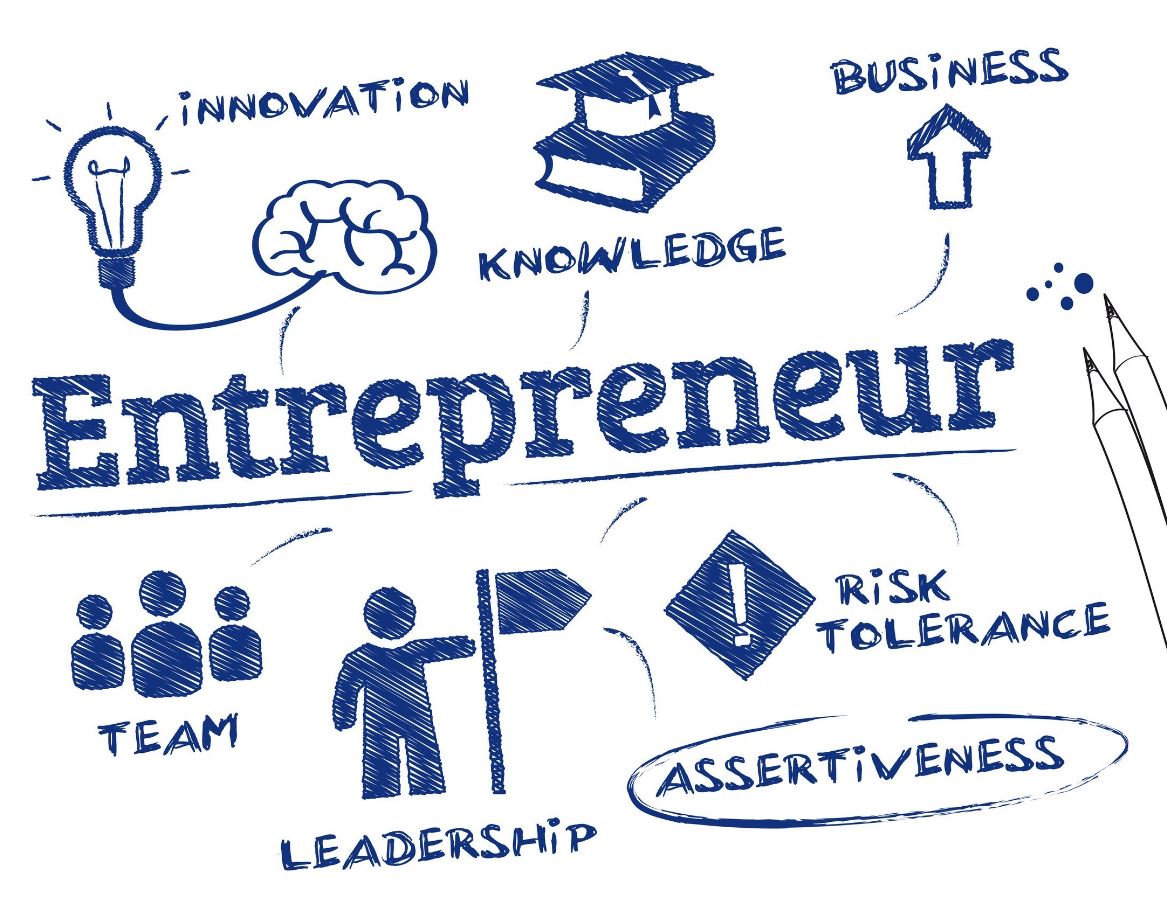
Modern Education Is Evolving To Teach The Language Of Risk, Creativity, And Resilience To The Next Generation Of Entrepreneurs
The New Classroom Of Innovation
Entrepreneurship used to be learned through survival, not syllabuses. It was a practice shaped by experience, often born out of necessity rather than structure. But in the last decade, a quiet revolution has been taking place inside universities, coworking spaces, and online platforms. The classroom has expanded beyond traditional walls, blending theory with experimentation. Entrepreneurship education has evolved from abstract lectures into living laboratories of trial and iteration. Students no longer learn by memorizing case studies alone; they learn by building, breaking, and rebuilding ideas in real time. This shift mirrors the changing world of work, where adaptability and innovation are more valuable than conformity and predictability.
The new classroom thrives on uncertainty. It celebrates ambiguity because every startup journey begins without guarantees. Instead of grades, success is measured in insights. Professors have become mentors, and students have become creators. They pitch, prototype, and collaborate across disciplines. The structure of education itself has begun to resemble the startup ecosystem, fast-paced, collaborative, and iterative. The goal is no longer to prepare graduates for existing jobs but to equip them to create their own. In this environment, learning is continuous, and failure is reframed as feedback. Entrepreneurship education, at its best, teaches the courage to explore the unknown, a skill more valuable than any static knowledge.
From Theory To Practice
One of the defining features of modern entrepreneurship education is its movement away from abstraction. Traditional business schools once focused heavily on analysis, requiring students to study successful companies without experiencing the uncertainty those companies once faced. Today, entrepreneurship courses are experiential by design. They immerse students in the real world, where markets are unpredictable and ideas must evolve quickly. Students are tasked with solving live problems, often collaborating with local startups, nonprofits, or even global companies experimenting with innovation. This approach bridges the gap between knowing and doing. It turns passive learning into active engagement, allowing students to internalize principles through practice rather than memorization.
Programs like startup incubators and university accelerators amplify this experiential model. They provide resources, mentorship, and sometimes funding to transform student projects into actual ventures. Through these platforms, education becomes entrepreneurial in itself. Each idea tested, each product launched, and each customer interaction teaches lessons that no textbook could convey. The process exposes students to the emotional highs and lows of entrepreneurship, from the thrill of progress to the frustration of setbacks. This form of learning creates lasting competence because it is earned through participation. The best entrepreneurship programs no longer ask students to imagine business, they require them to live it.
The Importance Of Emotional Intelligence
While many assume entrepreneurship is driven purely by strategy or innovation, the human element remains its core. Emotional intelligence, the ability to understand oneself and others, has become a crucial part of entrepreneurship education. Building a company is as much about leading people as it is about developing products. Educators are increasingly teaching empathy, communication, and resilience as entrepreneurial skills. They help students recognize that success often depends on how well they can collaborate, manage conflict, and maintain composure during uncertainty. Emotional literacy has emerged as a competitive advantage in a landscape where automation handles logic but not empathy.
Workshops on leadership, mindfulness, and negotiation have become as essential as finance or marketing. These sessions train future founders to manage stress, nurture creativity, and foster inclusivity within teams. Emotional intelligence also improves adaptability. Entrepreneurs who can interpret changing moods, whether in teams, markets, or customers, pivot more effectively. They respond with awareness rather than reaction. Education in this area reminds students that entrepreneurship is not about building empires alone; it is about building environments where people thrive together. The deeper lesson of modern entrepreneurship education is that leadership is not command, but connection.
The Role Of Mentorship In Shaping Vision
Mentorship has become the lifeblood of modern entrepreneurship education. It bridges the gap between academic knowledge and lived experience. Mentors bring stories, scars, and insights that textbooks cannot replicate. They provide context to theory, helping students understand how concepts play out in unpredictable real-world situations. In many universities and online programs, mentorship networks now form the backbone of entrepreneurial training. They expose learners to multiple perspectives, those of investors, founders, technologists, and creative thinkers. Through this diversity of voices, students develop nuanced understanding rather than rigid models of success.
Good mentorship is reciprocal. It challenges both mentor and mentee to reflect and grow. A mentor’s feedback helps students refine their ideas while reinforcing the mentor’s own clarity about industry trends. This exchange transforms learning into collaboration. Many successful founders trace their trajectory back to a single mentor who asked the right question or shared a crucial insight at a defining moment. By formalizing mentorship into entrepreneurship programs, education evolves into ecosystem building. It becomes less about instruction and more about conversation. The presence of mentors gives students a glimpse of what is possible, and just as importantly, what pitfalls to avoid. In this way, mentorship transforms aspiration into grounded ambition.
Digital Platforms As The New Teachers
The digital age has dismantled barriers that once limited access to entrepreneurial knowledge. Online learning platforms, communities, and courses have democratized education. What once required enrollment in prestigious institutions is now available to anyone with curiosity and an internet connection. Digital classrooms deliver lessons from global founders, venture capitalists, and innovators directly to laptops and smartphones. This accessibility has fueled a new wave of self-taught entrepreneurs who blend structured learning with independent exploration. It also fosters inclusivity by reaching learners from emerging economies, remote regions, and diverse backgrounds who might otherwise lack exposure to entrepreneurial networks.
However, accessibility also introduces new challenges. The abundance of online content can overwhelm learners without proper guidance. Curating credible sources becomes as important as consuming information. Many digital platforms now combine mentorship, community discussion, and peer review to create interactive ecosystems that replicate real-world collaboration. These platforms prove that entrepreneurship can be taught outside traditional structures, yet they also reinforce a deeper truth, learning happens best in connection with others. The future of entrepreneurship education lies in hybrid models that merge digital convenience with human depth. Technology expands reach, but community sustains relevance.
The Globalization Of Entrepreneurial Thinking
Entrepreneurship education has become a global language. What began as a Western academic pursuit has spread to every continent, adapted to local cultures and economies. In regions like Africa, South Asia, and Latin America, entrepreneurship is often framed as empowerment, a means to address unemployment and inequality. Local universities and organizations tailor programs to nurture community-driven innovation rather than purely profit-driven ventures. This localization of entrepreneurship education enriches the global narrative. It reminds us that entrepreneurship is not just about unicorns or valuations but about problem-solving in context. It can create sustainable growth, social inclusion, and resilience in communities that need it most.
Global collaboration also reshapes how entrepreneurship is taught. Virtual exchange programs allow students in different countries to co-develop ideas, combining diverse perspectives. These cross-cultural experiences teach adaptability and empathy. They reveal that creativity is universal but shaped by environment. The globalization of entrepreneurship education ensures that innovation no longer belongs to a privileged few. It belongs to anyone willing to learn, adapt, and act. In this sense, education becomes not just a tool for success but an engine for global equity. Every entrepreneur who learns to think globally contributes to an interconnected economy where knowledge transcends borders.
The Shift From Success To Sustainability
One of the most profound evolutions in entrepreneurship education is the redefinition of success. For decades, business programs celebrated rapid growth, market domination, and exit strategies. Today, educators emphasize sustainability, ethics, and long-term impact. Students are encouraged to question not only how to grow but why to grow. Courses integrate lessons on environmental stewardship, social responsibility, and conscious capitalism. The new generation of entrepreneurs learns to view profit as a tool rather than a destination. Success is measured by resilience, contribution, and alignment with purpose. This perspective marks a moral and strategic shift in how future founders approach business creation.
Case studies on sustainable startups, circular economies, and impact investment have replaced the singular focus on aggressive scaling. Students learn that innovation should solve problems without creating new ones. This mindset aligns education with the realities of a planet facing ecological and social challenges. Sustainable entrepreneurship demands awareness of interconnected systems, from supply chains to communities. Teaching this balance prepares founders to lead responsibly in an era where accountability shapes reputation as much as performance. The future entrepreneur is not just a builder of businesses but a guardian of balance, between ambition and empathy, speed and sustainability, growth and good.
The Future Of Learning To Build
Entrepreneurship education will continue to evolve as the world becomes more complex. Artificial intelligence, climate change, and new economic models are reshaping what it means to lead and create. Future curricula will emphasize adaptability as the core skill, the ability to learn, unlearn, and relearn continuously. Founders of tomorrow will be defined not by how much they know, but by how quickly they can translate learning into action. The classroom of the future may exist entirely in virtual ecosystems or real-world collaborations where learners are both teachers and builders. Education will no longer be a phase of life; it will be a lifelong process of iteration and discovery.
On StartUpSphere, where the spirit of creation meets reflection, entrepreneurship education is not a subject, it is a story in motion. It represents humanity’s collective effort to teach courage, curiosity, and care through the act of creation. Each student who learns to build before the world begins watching adds another chapter to this story. The future of innovation depends not on what we know but on what we are willing to keep learning. Entrepreneurship education ensures that learning itself remains the greatest act of entrepreneurship, the continuous construction of possibility in a world that never stops changing.