

Seeing The Battlefield Before The First Move
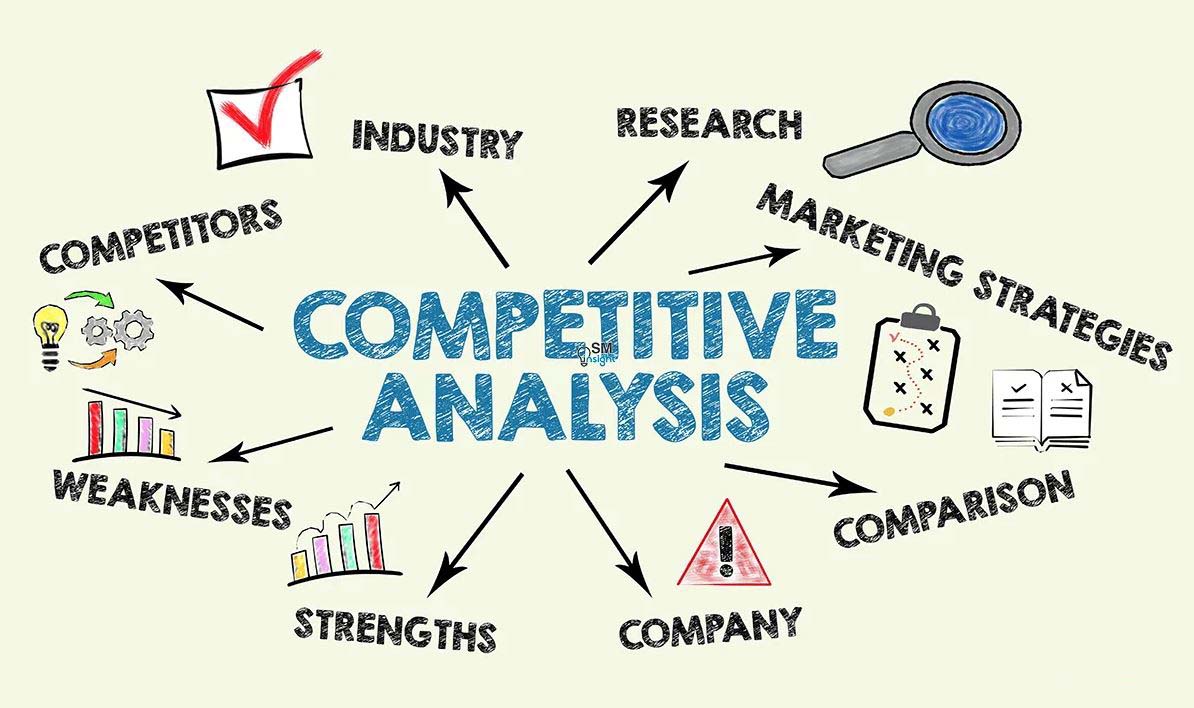
Startups Decode Markets, Identify Patterns, And Use Competitive Awareness To Build Stronger Strategies
The Lens That Reveals Hidden Opportunities
Every startup begins with an idea, but survival depends on context. Competitive analysis is not just about identifying rivals; it is about understanding the landscape in which your business lives. The most successful founders do not view competition as threat but as guidance. Each competitor offers data, lessons, and patterns that, when studied carefully, reveal how a market breathes. Seeing the battlefield before the first move transforms instinct into intelligence. In entrepreneurship, knowing your own strengths is valuable, but knowing how they contrast against others is transformative. This perspective shapes smarter positioning, better pricing, and more refined storytelling that aligns with real market needs.
The process of analysis must begin before launch and continue indefinitely. Markets evolve daily, and static understanding breeds stagnation. A startup that continuously analyzes competitors learns to adapt faster than those relying on outdated assumptions. This awareness helps identify gaps where innovation can flourish. Competitive analysis is not imitation; it is interpretation. It allows entrepreneurs to avoid repeating mistakes others already made and to recognize emerging patterns before they become trends. When done well, this discipline becomes less about reacting and more about predicting. It empowers decision-making that feels intuitive but is in fact grounded in evidence. Awareness becomes armor, and preparation turns into advantage.
Mapping The Landscape Of Influence
Understanding competition begins with mapping the landscape. This means identifying not only direct competitors but also adjacent ones that influence customer perception. A startup selling a fitness app, for instance, does not compete solely with other fitness apps but with streaming platforms, gyms, and even lifestyle influencers who shape how people approach health. Competitive awareness expands beyond the obvious. It is about identifying who or what competes for the same attention, time, and trust. The broader the map, the clearer the strategy. Startups that focus too narrowly risk being blindsided by new categories that emerge overnight, shifting customer behavior entirely.
Once the map is drawn, categorization helps bring clarity. Competitors can be grouped by scale, maturity, geography, or business model. This segmentation makes analysis actionable. Instead of trying to understand everyone, focus falls on understanding the few that matter most. The next step involves gathering tangible data, pricing models, feature sets, distribution channels, and customer engagement metrics. The goal is not to collect information endlessly but to extract insight. Patterns in how competitors communicate, evolve, or monetize reveal unspoken rules of the market. These rules, once understood, can be broken strategically. Mapping the competitive landscape is like charting a terrain before battle; it reveals both danger and opportunity before a single resource is spent.
Listening To The Voice Of The Market
Every competitor leaves behind traces of how customers perceive them. Reviews, testimonials, social comments, and forum discussions form a chorus of market sentiment. Listening to this voice is one of the most powerful tools in competitive analysis. It exposes emotional truths that raw data cannot capture. Numbers show performance, but stories reveal loyalty, frustration, and aspiration. By analyzing how customers talk about competitors, startups uncover what truly matters to their audience. This kind of listening transforms analysis from detached observation to empathetic understanding. It bridges the gap between strategy and emotion, which is where most purchasing decisions are made.
Customer sentiment often exposes the weaknesses competitors try to hide. If users consistently complain about complexity, that becomes an opening for simplicity. If they mention exceptional support, it signals a strength worth studying. Patterns of praise and criticism show where value lives in the minds of customers. Listening also prevents arrogance. Founders who believe their intuition alone defines customer need often build in isolation. Those who listen actively stay aligned with reality. Every tweet, comment, and review is a piece of intelligence in the living puzzle of market perception. In a world where opinions spread faster than facts, hearing the customer’s voice through competitors is as vital as hearing your own.
Extracting Insight From Data, Not Just Numbers
Competitive analysis becomes powerful only when information transforms into interpretation. Data without insight is noise. The key lies in connecting metrics to meaning. For example, knowing a competitor’s pricing structure matters less than understanding why customers accept or reject it. Observing their ad frequency reveals spending patterns, but understanding which campaigns convert defines relevance. Data should never be collected passively. Instead, it must be questioned constantly, what does this mean for us? How does this reflect customer behavior? Insight arises when data becomes narrative, not when it accumulates in spreadsheets. Startups that interpret creatively often find opportunity hidden in plain sight.
Tools like market intelligence platforms, SEO trackers, and customer analytics systems provide the foundation. But interpretation requires context. A sudden drop in a competitor’s engagement rate might indicate fatigue or a shift in focus. A surge in content output could reflect pressure to reclaim visibility. Patterns of hiring on public job boards can even indicate upcoming strategic shifts. The deeper the interpretation, the more predictive it becomes. Competitive analysis should not end with knowing what competitors do, it should end with understanding what they will likely do next. Anticipation separates leaders from followers. It allows startups to move first while others are still reacting.
Turning Observation Into Positioning
Information alone does not build advantage; positioning does. Competitive analysis provides the raw material for differentiation. Once startups understand how others present themselves, they can define how to stand apart. The most powerful positioning strategies are not about being better in everything but about being exceptional in something specific. Analysis helps identify which territories competitors dominate and which they neglect. Those neglected spaces often become the most fertile ground for innovation. Instead of fighting established players head-on, a startup can carve a niche that redefines the conversation. Positioning is not war, it is artful placement where your strengths meet market need in the absence of noise.
Effective positioning also relies on emotional framing. It is not enough to say what you do differently; you must explain why it matters. Competitor analysis clarifies this because it shows what customers already associate with others. For example, if one company owns the “fastest” narrative, another might focus on “simplest” or “most human.” Distinction comes from contrast. Startups that fail to position clearly blur into the background. Those that leverage analysis to identify gaps in perception rise quickly. The key is to transform competitive awareness into creative clarity. Positioning built from knowledge rather than assumption is resilient because it reflects truth, not aspiration.
Learning From Strengths Without Copying Them
It is tempting to imitate what works, but imitation rarely produces lasting success. Learning from competitors should never mean replication. Instead, it involves understanding the underlying logic behind their success and adapting it authentically. For example, if a competitor succeeds through community engagement, the takeaway is not to build the same forum but to understand why that engagement works, trust, accessibility, or tone. Founders should look for transferable principles rather than direct tactics. This approach protects originality while still drawing inspiration from proven strategies. The best startups learn from everyone but copy no one.
Studying strengths also illuminates what not to chase. Just because a strategy works for a larger or more established company does not mean it fits an early-stage startup. Scale changes everything. Startups that evaluate competitors through the lens of their own capabilities avoid overextension. Learning from others should refine focus, not distract it. Competitive analysis becomes a mirror that reveals both potential and limits. It keeps ambition grounded in realism. When founders understand the why behind another company’s success, they gain perspective without losing individuality. The goal is to evolve ideas into something original enough to lead rather than follow.
Detecting Weakness Before It Becomes Opportunity
Every competitor, no matter how dominant, has vulnerabilities. These weaknesses are often disguised beneath layers of marketing or hidden in areas where customers’ needs evolve faster than a company can adapt. Detecting these weak points requires patience and observation. They appear in subtle signs, slower product updates, inconsistent messaging, or declining engagement. By studying these cracks, startups can predict where disruption will be most effective. For instance, if a leading company focuses heavily on enterprise clients, that leaves room for startups to serve small businesses with agility. Weakness is rarely permanent, but timing matters. The best opportunities exist in the brief moments before incumbents respond.
Weakness also reveals the danger of complacency. Startups must analyze themselves with the same scrutiny they apply to competitors. The most threatening weakness often hides within one’s own operation. A founder who studies competitors to expose flaws must also be brave enough to apply the same lens inward. Self-awareness prevents replication of mistakes others have already made. The process of identifying weakness, therefore, becomes a double-edged advantage, it informs attack and defense simultaneously. In competitive markets, awareness is the only antidote to overconfidence. When startups observe carefully, they can predict both how rivals will fail and how they themselves might avoid the same fate.
The Strategic Edge Of Continuous Curiosity
Competitive analysis is not a phase of strategy; it is a habit of thought. The most successful founders never stop asking questions about their environment. They treat the market as a living system, always shifting and always teaching. Continuous curiosity transforms data into foresight. It prevents stagnation and inspires innovation. As technology accelerates and industries converge, the boundaries between competitors blur. Startups that maintain curiosity stay alert to new threats and opportunities alike. They do not wait for trends to arrive; they sense them forming. Competitive intelligence becomes the radar that navigates uncertainty.
Ultimately, the goal of analysis is not to obsess over others but to understand yourself better through contrast. It clarifies where your company fits, how it evolves, and why it matters. In the story of entrepreneurship, awareness is the difference between reacting and leading. Competitive insight is not about fear of rivalry, it is about mastery of perspective. On StartUpSphere, where innovation is both art and science, founders learn that the sharpest advantage comes from observation paired with action. Seeing the battlefield before the first move is not a defensive act. It is the essence of strategic creation, the art of knowing exactly where to strike and precisely when to move.